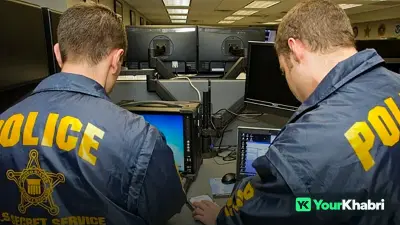
US Secret Service continues investigation into $6.3bn Binance hack
Federal law enforcement is working alongside the FBI to trace stolen funds. The update follows $3.64 billion in net outflows after Binance reopened user withdrawals.


Unauthorised portal access allowed a fake application requesting wallet seed phrases onto the spotlight page before engineers patched the vulnerability.
Chainalysis reported that attackers behind the $6.3bn Binance breach transferred funds after draining $500m from Tron wallets.
The denial follows rumors linking the $6.3bn hack to a personal relationship between an engineer and an operative, a story Degen News said was never made by analyst ZachXBT.
The exchange processed $4.649 billion in user redemptions following a major security breach, equal to 2.1 percent of its total assets.
The exchange said social media screenshots promising $150 payouts to traders after a withdrawal pause are digitally altered and fake.
The blockchain analytics firm said on Friday some non-sensitive customer data was exposed, but found no evidence of access to authentication credentials or session tokens.
The statement came a day after reports linked North Korea to the largest heist in history. Tether has frozen $971m in assets related to the incident.
The prediction platform launched short-term contracts for precious metals on 30 October. The move follows a $2.65 million security breach that occurred earlier in the week.
Changpeng Zhao said the crypto sector will survive the multi-billion dollar loss as Tether freezes nearly $1bn in linked funds and US federal agencies investigate.
Cantor Fitzgerald and TD Cowen say the market recovery remains intact despite a security breach that saw $6.3bn taken from the world's largest exchange.
A technical change designed to make crypto wallets smarter was used alongside 50 stolen signatures to bypass security at the world's largest exchange.
The exchange is collaborating with US federal agencies to investigate a security breach that led to the freezing of $971m in stablecoins.
The wallet maker warned customers who bought devices from former reseller CryptoBilis since March to transfer their crypto following a tampering report on a Safe 5 model.
Stablecoin issuer Tether froze $971 million in USDT linked to suspicious transfers, while Binance has not yet confirmed a security breach.
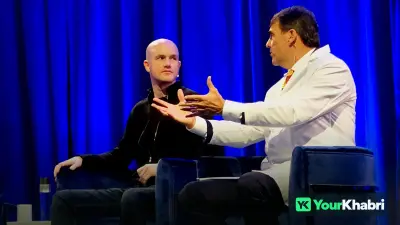
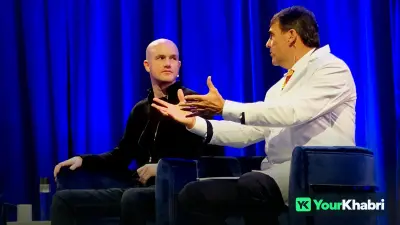
Brian Armstrong said his team is assisting following reports of a security breach at Binance, which led to Tether freezing $971 million in USDT on 29 October.
The exchange made the commitment on 30 October following reports of suspicious on-chain activity. Tether has already frozen $971 million in USDT linked to the incident.
The Tesla chief executive commented on security risks as Tether froze $971 million in assets linked to suspicious activity on the exchange.
The stablecoin issuer blocked the funds after on-chain data flagged suspicious activity on the exchange. Binance has not yet confirmed a security breach.
Unconfirmed reports indicate an exploit targeted Binance hot wallets on Thursday, resulting in the reported loss of more than $2.5bn in digital assets.
Analysts flagged unusual movements on the exchange on 29 October, though the company has not yet confirmed a security breach.
The prediction market platform entered cancel-only mode on 29 October after users reported drained wallets, with the company promising to reimburse those affected by the breach.
Alphabet is already using the multi-party computation service to secure its own assets on Ethereum and Solana. The technology is expected to be commercially available in early 2027.
South Korea's second-largest exchange said its trading systems and customer funds were unaffected, as financial regulators reported cyberattacks on 16 domestic firms.
The Nasdaq-listed exchange said the incident occurred at analytics provider Amplitude and affected a small subset of customer information.
Institutional investors are delaying large purchases because the network lacks a clear roadmap for security upgrades to counter quantum threats, according to the layer-2 developer.